Pamparaptor is an extinct genus of carnivorous deinonychosaur from the late Cretaceous period. It is a basaldromaeosaurid dinosaur with troodontid-like pes which lived during the late Cretaceousperiod (Turonian to Coniacian stage) in what is now Neuquén province, Patagonia, Argentina. It is known from the holotypeMUCPv-1163, an articulated and nearly complete left foot.
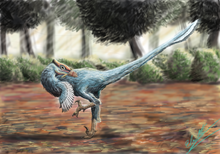

The specimen recovered from the Portezuelo Formation (Río Neuquén Subgroup) of Neuquén Group. It was initially considered to be a juvenile specimen of another dromaeosaurid species, Neuquenraptor argentinus.[1] However, it was later re-interpreted as a new genus and named Pamparaptor by Juan D. Porfiri, Jorge O. Calvo and Domenica dos Santos in 2011 and the type species is Pamparaptor micros. The generic name honors Indian Pampas people who lived in central Argentina while "raptor" (robber in Latin). The specific name (micros, meaning "small") refers to the specimen's size (estimated at 0.5 to 0.7 metres (1.6 to 2.3 ft) in length).[2]
| This article uses material from the Wikipedia article Metasyntactic variable, which is released under the Creative Commons Attribution-ShareAlike 3.0 Unported License. |